
In modern eyewear, clarity is no longer defined only by prescription strength. Visual comfort, reduced glare, and better light transmission all play a critical role in how well you see and how comfortable your eyes feel throughout the day. This is where anti-reflective (AR) coating becomes essential.
Anti-reflective coating is one of the most widely recommended lens enhancements by opticians and eye care professionals worldwide. Whether you drive at night, work long hours in front of digital screens, or simply want your glasses to look better, AR coating can dramatically improve your visual experience.
This comprehensive guide explains everything you need to know about anti-reflective coating for glasses. The content is written in clear, engaging language, structured according to SEO best practices, and designed to keep readers informed and interested from start to finish.
What Is Anti-Reflective (AR) Coating?
Anti-reflective (AR) coating is a thin, multi-layer treatment applied to the surface of eyeglass lenses. Its primary purpose is to reduce reflections and glare by allowing more light to pass through the lens rather than bouncing off its surface.
Standard lenses reflect a noticeable percentage of incoming light, which can cause distracting glare, halos around lights, and reduced visual clarity. AR coating minimizes these reflections on both the front and back surfaces of the lens, resulting in sharper, more comfortable vision.
AR coating is also commonly referred to as anti-glare coating and is available for nearly all lens materials, including plastic, polycarbonate, and high-index lenses.
How Does Anti-Reflective Coating Work?
The technology behind AR coating is based on optical physics and precise engineering.
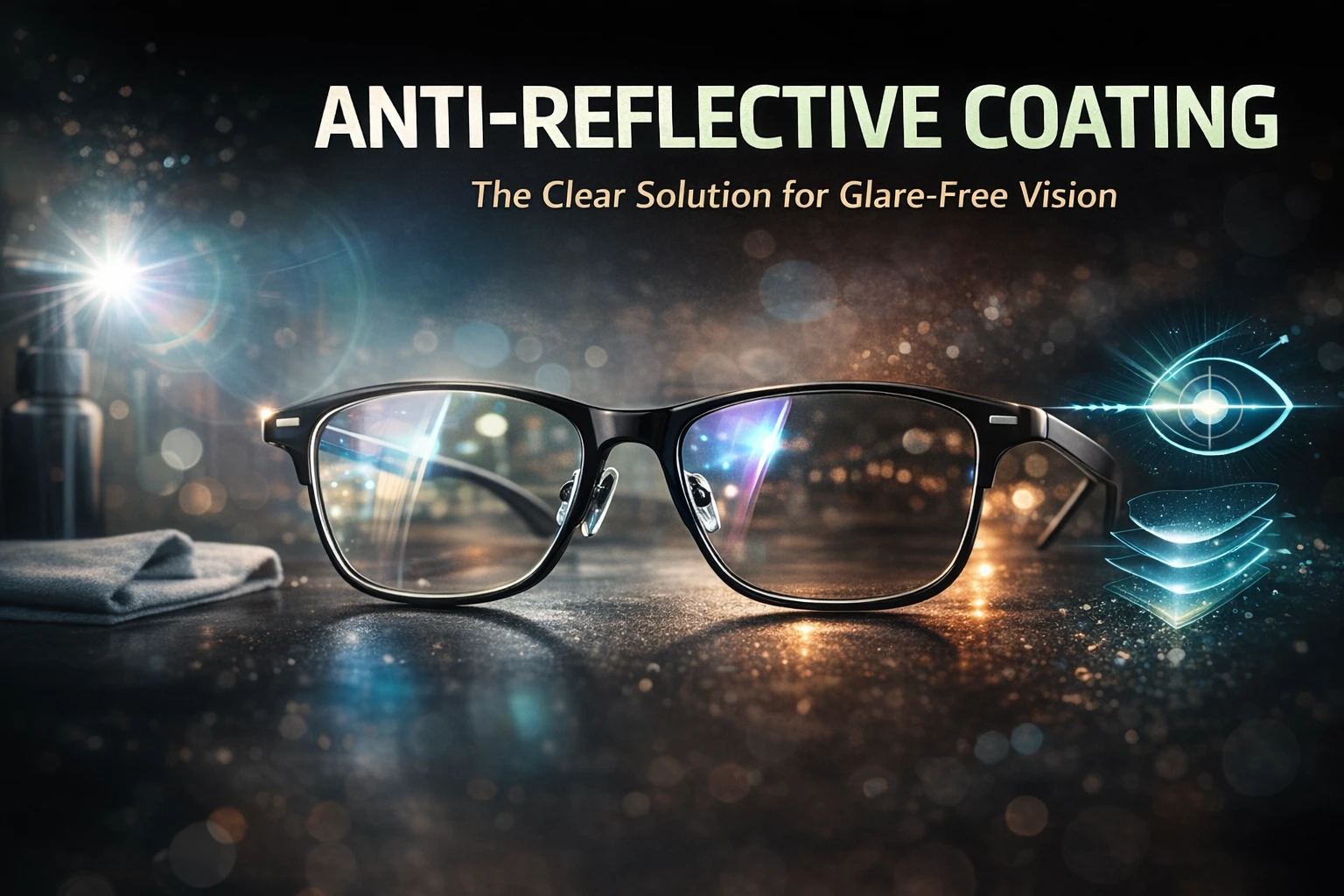
AR coatings are made by applying multiple ultra-thin layers of metal oxides to the lens surface. Each layer is engineered to interfere with specific wavelengths of light. When light waves hit the lens, these layers cancel out reflected light waves through a process known as destructive interference.
As a result:
- Reflections are significantly reduced
- More light passes through the lens
- Visual clarity improves in various lighting conditions
Modern AR coatings can allow up to 99.5% of available light to reach the eyes, compared to much lower transmission rates in uncoated lenses.
Key Benefits of Anti-Reflective (AR) Coating
Reduced Glare for Safer Night Driving
Night driving can be particularly challenging due to headlights, streetlights, and reflective road surfaces. AR coating helps by reducing glare and internal reflections that cause visual distractions.
Benefits for night driving include:
- Fewer halos around headlights
- Reduced ghost images
- Less discomfort from blue-tinted LED headlights
- Faster glare recovery time
These improvements support safer and more confident driving after dark.
Improved Comfort for Screen and Computer Use
Extended screen time is one of the most common causes of eye strain today. Reflections from screens and overhead lighting can worsen symptoms such as:
- Headaches
- Blurry vision
- Dry eyes
- Visual fatigue
Anti-reflective coating reduces surface reflections on lenses, helping maintain consistent visual performance during long periods of computer or smartphone use. This makes AR-coated lenses especially valuable for office workers, students, and remote professionals.
Clearer, Sharper Vision
By increasing light transmission, AR coating enhances overall visual clarity. Many wearers report that small text, fine details, and low-contrast objects appear easier to see.
In controlled studies conducted under glare or stray-light conditions, participants wearing AR-coated lenses consistently reported better visual comfort and fewer perceived reflections compared to those wearing uncoated lenses.
Better Appearance and Clearer Photos
Anti-reflective coating improves not only how you see, but also how your glasses look.
Without AR coating, lenses can appear shiny or reflective, making it harder to see the wearer’s eyes. This effect becomes more noticeable in photographs, video calls, and social settings.
AR-coated lenses:
- Reduce visible lens reflections
- Make eyes more visible behind glasses
- Improve appearance in photos and videos
For stronger minus prescriptions, AR coating also reduces internal reflections that can cause faint circular patterns along thick lens edges.
Types of Anti-Reflective Coatings
Standard AR Coatings
Basic AR coatings focus primarily on reducing glare and reflections. They improve clarity but may require more careful handling.
Premium AR Coatings
High-quality AR coatings often include additional features such as:
- Scratch resistance
- Smudge resistance
- Anti-fog properties
- Easier cleaning
These coatings are designed for longer durability and better everyday performance.
Blue-Light Filtering AR Coatings
Some AR coatings are designed to filter blue-violet light emitted by digital screens. While research is ongoing, many optometrists consider these coatings safe and potentially beneficial for people with heavy screen exposure.
How to Choose the Right Anti-Reflective Coating
Not all AR coatings are the same. Each manufacturer uses a unique formula with varying numbers of layers and added features.
High-quality AR coatings may include up to seven ultra-thin layers, each targeting different wavelengths of light. Despite this complexity, the total thickness of the coating is extremely small—typically around 0.2 to 0.3 microns.
Your optician may recommend a specific AR coating based on:
- Your prescription strength
- Lens material
- Daily activities
- Screen usage habits
- Night driving needs
Factors to Consider Before Choosing AR Coating
Lens Material
Certain lens materials, such as polycarbonate and high-index lenses, naturally reflect more light. These lenses benefit the most from AR coating.
Prescription Type
Progressive, bifocal, and trifocal lenses often perform better with AR coating, as it improves clarity across multiple viewing zones.
Lifestyle
If you frequently drive at night, work on digital devices, or appear on camera, AR coating can significantly enhance comfort and appearance.
Factory-Applied vs Lab-Applied AR Coatings
Some lenses come with factory-applied AR coating on both surfaces, while others receive the coating after being customized to your prescription in an optical lab.
Both methods are effective when done correctly, but premium lab-applied coatings often allow for more customization based on individual needs.
How to Clean and Care for AR-Coated Lenses
Proper care is essential to maintain the performance of anti-reflective coatings.
Best practices include:
- Use only lens cleaners recommended by your optician
- Rinse lenses with water before wiping
- Clean with a microfiber cloth
- Avoid harsh chemicals or paper products
Never clean dry AR-coated lenses with a dry cloth, as this can cause fine scratches that are more visible on coated surfaces.
Is Anti-Reflective Coating Worth It?
Whether AR coating is worth the investment depends on your visual needs and lifestyle. While the coating can wear over time, proper care supports long-lasting performance.
Many wearers find premium AR coatings especially valuable due to their added durability, scratch resistance, and ease of cleaning. For people who rely on their glasses throughout the day, AR coating is often considered a worthwhile upgrade.
Frequently Asked Questions About AR Coating
How Can I Tell If My Glasses Have AR Coating?
Look at your lenses from an angle. AR-coated lenses usually reflect a soft green, blue, or yellow-green hue instead of a strong white glare.
Does AR Coating Block Blue Light?
Some AR coatings include blue-violet light filtering as an additional feature. While their long-term benefits are still being studied, they are considered safe and commonly recommended.
How Long Does Anti-Reflective Coating Last?
Most AR coatings are designed to last the lifespan of your lenses. However, prescriptions typically change every one to two years, making regular eye exams important.
Final Thoughts
Anti-reflective coating is one of the most impactful enhancements you can add to your eyeglass lenses. By reducing glare, improving clarity, and enhancing appearance, AR coating supports both visual performance and everyday comfort.
For anyone seeking clearer vision, safer night driving, and better screen comfort, anti-reflective coating is a smart and practical investment in eye health.